
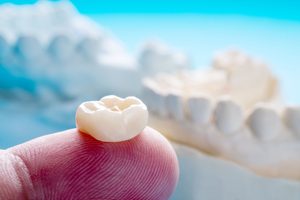
Dental crowns are the tried-and-true way to restore cracked, broken, decayed, or treated teeth that are too injured for a filling to be effective. These tooth-shaped caps are cemented over the affected enamel to help rebuild its function and appearance so that you can continue to eat, speak, and smile normally.
But these prosthetics haven’t always been as lifelike, reliable, or long-lasting as they are today. Continue reading to learn how they evolved over time so you can appreciate your new restoration that much more!
When Were the Earliest Dental Crowns Made?
Many patients think of this treatment as a relatively recent invention, but archeological evidence suggests they’ve been used since ancient times. For example, some sources report that the earliest known versions may trace back to the ancient Etruscans in what is now Italy, who made gold crowns between 166 and 201 AD.
However, it’s believed these may have been more cosmetic than functional, because pure gold can be too soft to withstand the pressures of daily biting and chewing. It’s also a precious metal and therefore indicated wealth, meaning that the earliest dental crowns may have mostly functioned as status symbols.
How Did Dental Crowns Evolve?
Dentistry didn’t evolve much until around the Middle Ages in Europe. As the sugar trade expanded with Eastern cultures, more people developed oral issues, such as cavities, requiring treatment. Barbers often handled this care, filing teeth or applying acid washes to make teeth look cleaner and brighter. Unfortunately, these solutions often made matters worse, resulting in frequent tooth loss.
As a result, around the 1500s, physicians and other scientists began to experiment with new materials and methods to treat oral issues. In 1575, a French barber-surgeon named Ambroise Paré, considered one of the ‘fathers of surgery,’ published a “Complete Works” on dentistry, which included technical information for placing dental crowns to treat tooth decay. Then, in 1889, Dr. Charles H. Land developed an all-porcelain dental crown, which eventually evolved into contemporary restorations as we know them now.
What Are Dental Crowns Like Today?
Today, these prosthetics are usually crafted from resilient, tooth-colored materials like porcelain and can be customized to match the size, shape, and tone of your natural teeth for beautiful results no one is likely to notice. Updated technology and techniques have also led to longer-lasting results, so most patients can expect their restoration to last 5 to 15+ years with proper care.
Thanks to ongoing advancements in the field of dentistry, contemporary dental crowns are more beautiful and comfortable than ever before!
About the Practice
Patients at Morgan Hill Dental Care benefit from a team of experts who are committed to helping them build and maintain beautiful, healthy teeth and gums. With general dentists and specialists on staff, they provide a comprehensive menu of services, including dental crowns, to meet the needs of people of all ages. Their attention to detail, paired with advanced technology, delivers comfortable, accurate outcomes meant to last. You can request an appointment on the website or call (408) 778-4838.